Multilingual and RTL Receipts

Multilingual and RTL Receipts
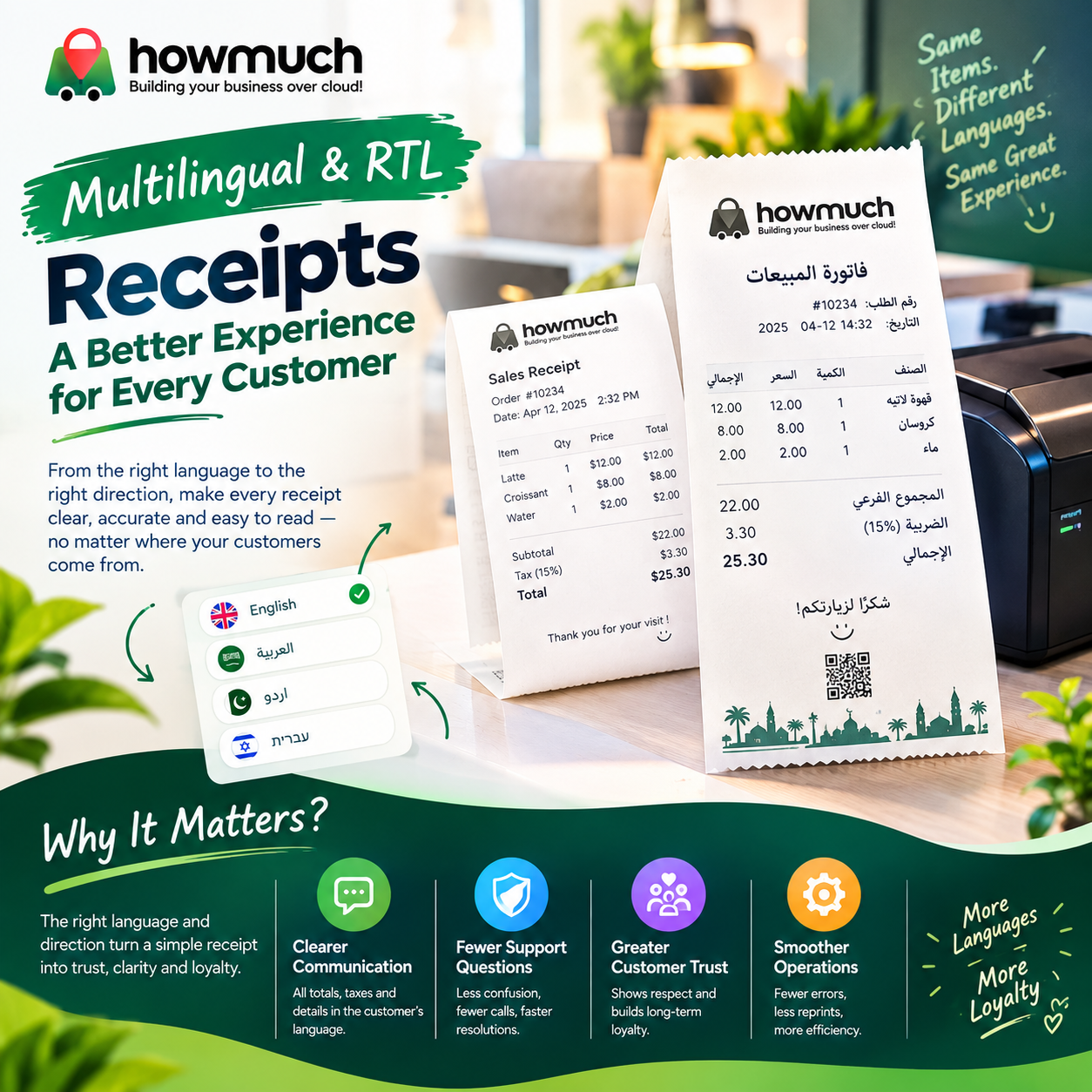
After a customer purchases something, the last thing they will see is a receipt. If that receipt does not show up in the right language or have text that is in the wrong direction, it is a broken experience. There are ways to solve this problem, like processing multi-lingual and RTL (right-to-left) receipts, which automatically show all totals, taxes, reading all the receipt items in the desired language and direction, and all the messages in the same language and direction that the customer expects. The outcome is quantifiable improved clarity, reduced support questions, improved trust and smoother operations.
The subtle power is in the receipts, as businesses that use them simply as a printout overlook this opportunity. Customers that spend money on proper multilingual and RTL aid can measure the distinction in customer satisfaction, error reduction and efficiency. Most modern point-of-sale systems will already have the hardware and software needed. The actual challenge comes in setting them up, so that each receipt provides the correct data at the correct time, and in the correct manner.
Why is it that Multilingual and RTL Support is relevant in measurable terms?
When a customer cannot easily read the receipt, it creates friction at the point of transaction closure. Customers might have questions about the total, they may not know the discounts or taxes, or they may not be sure about the returns policy. Every additional confusion adds to the risk of a counter question, a support call later on or a bad brand image.
If receipts are in the customers desired language and are read in the proper direction, those friction points are reduced. Companies that measure the results tend to have less post purchase questions, quicker resolution for simple queries, and increased confidence in the transaction. The difference is even greater in markets where there are an important number of speakers of Arabic, Hebrew, Urdu or other RTL languages. If your text reads well from right to left it seems natural if it does not, it sounds strange and unprofessional for left to right reading.
This is true for languages as well. Providing a receipt in a language other than English demonstrates respect for the customer base and decreases confusion in both understanding and recalling numbers and terms in a foreign language. These small enhancements add up over time to more effective communication and greater loyalty.
This course covers core elements of successful multilingual and RTL receipts.
There are several practical foundations for a successful implementation.
Language detection and selection needs to be dependable. Some cashier systems let the cashier select the language that the transaction will be conducted in. Some identify language preferences based on customer profiles, loyalty information, or geographic preferences. The objective is consistency after choosing a language, each line in the receipt item names, totals, tax labels, footer messages should be in that language.
Support for RTL layout is more than just flipping text. The receipt has to adjust itself in order to be properly rendered right-to-left. Numbers and currency symbols, as well as text in mixed languages, should line up. The description of the items, prices and totals must flow from the right side of the page. If implemented poorly, it can result in a mirrored receipt, broken alignment, or overlapping characters which will make the receipt more difficult to read than a receipt in one language.
The quality of translation is also a key factor. Product names and legal disclaimers are usually poorly translated. Careful translations or done professionally to keep the clarity and the tone of the brand. Having the same terms used throughout all languages helps avoid confusion if customers are comparing receipts or reaching out to support.
This software must be compatible with the printer. Not all receipt printers or POS systems support complex scripts and bi-directional text. With real RTL content and multiple language testing, no surprises on the sales floor.
How to Measure the impact of a Multilingual RTL Receipts
When certain amounts are monitored, the worth of these receipts becomes apparent.
After implementing multilingual and RTL support, businesses can gauge the savings in the number of customer queries regarding totals, taxes, or item descriptions. They can monitor staff reprint or verbal explanation frequency of a receipt. They can track customer feedback on the clarity of checkouts and the overall professionalism in customer feedback.
Other operational metrics are also upgraded. If receipts are immediately understood, the amount of time taken to resolve simple post sale questions is reduced. Even small gains in AHT can add up over hundreds of transactions in high volume environments with multiple languages.
Its more difficult to measure the direct impact on brand perception directly, but it is still measurable. People who are sent a receipt in their native tongue and correct reading order will be more inclined to believe that the business "gets" them and respects them. This sensation impacts on repeat visits and word of mouth recommendations.
In this section, you will learn about common problems and how they can be prevented.
There are common problems that hamper the effectiveness of multilingual and RTL receipts.
One of the most common issues is incompleteness in translation. When you receive a receipt that is mixed in language, for example, English header and Arabic item name, it can only make people more confused. All elements should be positioned.
Visual errors occur with bidirectional handling that is incorrect. Numeral values might show on the opposite side, currency symbols might drop off the top of the numbers, and the line items may not line up. The only way to identify these problems before they are experienced by the customer is to run extensive tests on real RTL content.
It can also develop issues because of the failure to take regional differences into account. For example, the words used, or the number formats, are slightly different in each Arabic speaking market. The problem with a universal translation is that it might sound like a generic or inaccurate translation.
Lastly, if maintenance is not carried out regularly, the receipts will become obsolete. New Products, new tax rules and new promotional messages should be accurately represented in all supported languages. If there is a clear process for updates, the quality of multilingual receipts falls over time.
Developing a pragmatic multilingual and RTL strategy
Best results are achieved when handling receipts as a component of the customer service experience and not as a technical exercise.
Start with understanding the main languages spoken by your customers and focus on the languages that reach the most. Check that your POS and printer environment is completely RTL and complex script capable. Pay attention to correct translations and standardized vocabulary. Make sure to test extensively in each language with real transactions. Then measure the results less questioning, shorter resolution times and better customer feedback.
For a single store, or a multi-location chain, its the same concept. All receipts must be as clear as possible in conveying totals, details and messages. If this clarity is presented in the customers language, and reading direction, the transaction concludes on a note of professionalism and respect.
Frequently Asked Questions
What impact does multilingual and RTL receipts have?
Companies that monitor outcomes tend to experience a decline in inquiries from customers regarding receipt, quicker handling of simple inquiries, and better perceptions of professionalism especially in markets with a high RTL language population.
Do all customers need to use full RTL, if they are mainly using left-to-right languages?
Yes, if a significant number of customers use right to left languages. Insufficient or improper implementation of RTL can lead to more visual issues than solutions. Bidirectional layout is important for readability.
Is it possible for small businesses to implement receipts that are multilingual, but are not so complex?
Yes. There are already a number of POS systems today that offer language selection and basic multilingual templates. Beginning with the most prevalent local languages and making sure that clean translation value is already realized.
When is it best to review content for receipts?
As products, taxes, promotion, or laws change, the text will be updated accordingly. Older translations are less clear, and may lead to compliance and trust problems.
What is the worst that can happen if you dont consider multilingual or RTL requirements?
Receipts are sent to customers that they dont understand very well. The impact is that of unhelpful questions, loss of confidence in the process, and undeniable brand damage over time.
Multilingual receipts and RTL receipts make a regular paper or digital receipt document into a clear and respectful end to the sale. If every amount, description and message is in language and direction the customer is expecting, the friction goes down and the confidence up. This is a technology that is available in most modern systems. The next step is to set up and maintain it with precision and care so that each receipt is communicated with precision and care.
0 Comments